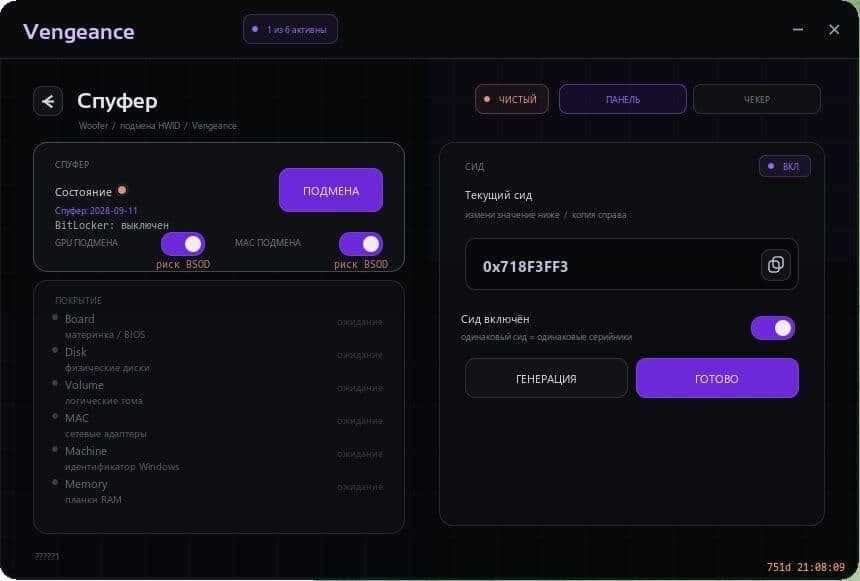
Vengeance spoofer for HWID Spoofer
Cheat Description
The system does not forgive mistakes. HWID Spoofer is a solution for those who are faced with a blockage and are looking for a way back. At Vengeance Spoofer, we talk about what's behind the tool: understanding hardware identification, the risks, and the price paid by someone who acts without calculation.
Cheat Functions
Functions Vengeance spoofer SUPPORTED ANTICHEATS
EAC BE RICOSHET ACE SUPPORTED GAMES
Rust ARC Raiders Arena Breakout Delta Force Apex Legends Escape from Tarkov Fortnite (including tournaments) The Finals Call of Duty Insurgency Sandstorm BattleBit Ark Survival DayZ Rainbow Six Siege The Division 2 Arma New World PUBG SCUM Battlefield Dark and Darker Paladins Hell Let Loose Unturned Other EAC/BE protected games OTHER
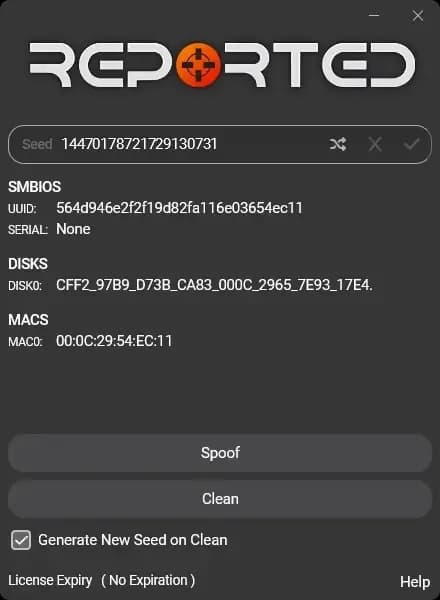
TPM 2.0 Storage drive serials RAM serials Monitor serials S.M.A.R.T Network adapters Registry values MAC address GPU CPU Motherboard AR protocol Registry USB
CHOOSE SUBSCRIPTION TIME
We accept



System requirements
Supported CPU:
Intel & AMD
Supported OC:
Windows 10/11
Frequently bought together


Similar products

Customer reviews
No reviews yet — you can be the first.
Vengeance Spoofer is a tool for users who need to bypass hardware bans. It spoofs HWID components such as CPU, GPU, motherboard, MAC address, and more. The tool is reported as undetected at the time of writing.
Different subscription periods and pricing options may be available. The spoofer works with several anti-cheats including EAC, BE, RICOCHET, and ACE. It supports a wide range of games like Rust, Escape from Tarkov, Fortnite, Apex Legends, and many more.
Before purchasing, verify that your game and anti-cheat combination is still compatible. Follow the provided installation instructions. AnyHacks support can help with specific questions. Remember that status may change after updates.
FREQUENTLY ASKED QUESTIONS
It is a HWID spoofer that helps users bypass hardware bans by hiding system identifiers.